
Tinnitus Evaluation & Management
At Capital Institute of Hearing & Balance, our doctors are trained in evidenced-based evaluation and treatment methods for tinnitus.

Our tinnitus providers hold the Certificate of Tinnitus Management (CH-TM) — a credential held by fewer than 500 audiologists. At Capital Institute of Hearing & Balance, tinnitus isn't a side service — it's a specialty. You'll work with a provider who is not only trained and certified in tinnitus management, but who truly cares about getting you the relief you need.
Live Better, Hear Better: Tackling Tinnitus
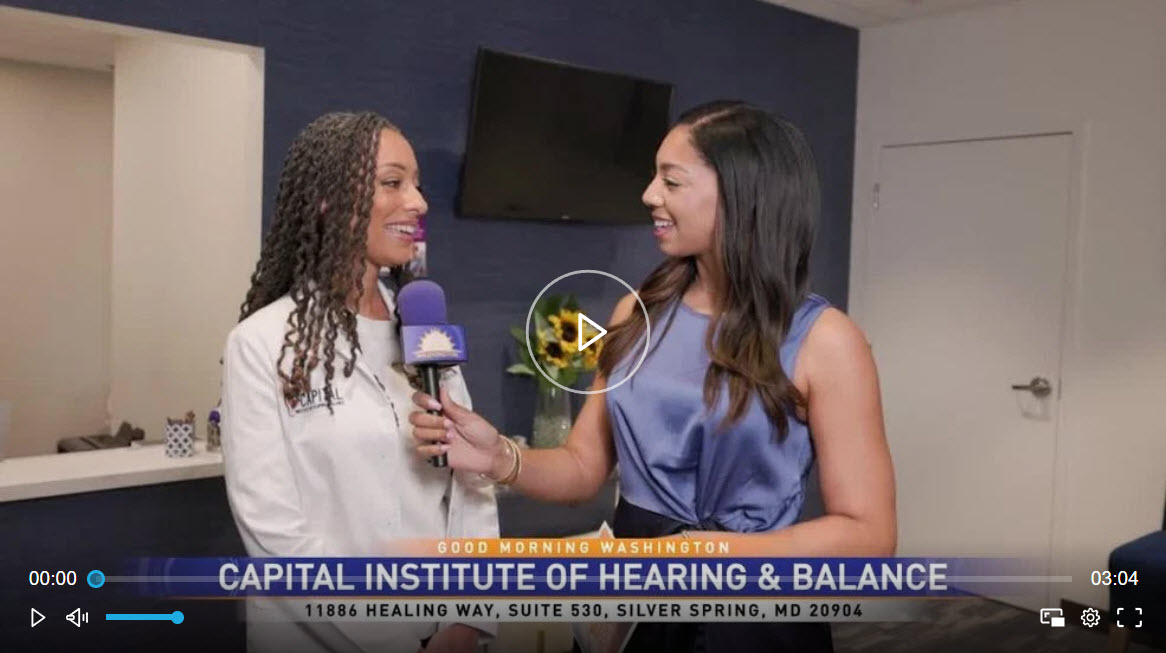
Finding Relief from Tinnitus
Expert Care at Capital Institute of Hearing & Balance

Are you experiencing persistent sounds in your ears or head that no one else can hear? This common condition is called tinnitus (pronounced TINN-it-us or tin-EYE-tus), and it can manifest as ringing, buzzing, whistling, whooshing, or other phantom noises. While tinnitus can vary in sound and intensity, it can significantly impact your daily life.
At Capital Institute of Hearing & Balance, our doctors are highly trained in evidence-based methods for evaluating and managing tinnitus. We understand that each patient's experience is unique, which is why we develop a personalized treatment plan to help you gain control and find lasting relief from your tinnitus.
Tinnitus affects about 10-15% of the global population and occurs in nearly 90% of individuals with hearing loss.
Understanding Tinnitus: More Than Just a Sound
Tinnitus is the perception of sound when no external sound source is present. It is often a symptom of an underlying issue rather than a disease itself.
Common factors that can contribute to tinnitus include:
Hearing Loss: This is a frequent cause, as the brain may try to compensate for reduced external sound input.
Noise Exposure: Damage from loud sounds can affect the delicate structures within your inner ear.
Head or Neck Injuries: Trauma can impact the auditory system.
Certain Medications: Many drugs have tinnitus as a side effect.
Stress and Anxiety: Emotional factors can often intensify the perception of tinnitus.
Other Health Conditions: Such as high blood pressure or issues with the jaw joint (TMJ).
The sounds of tinnitus are diverse and can include:
A high-pitched ringing or hissing.
A pulsating whooshing sound that may match your heartbeat (called pulsatile tinnitus).
A low-frequency buzzing or humming.
Clicking, roaring, or other unique sounds.
Tinnitus can be constant or intermittent, and its loudness can range from barely noticeable to quite bothersome. When tinnitus is persistent and intrusive, it can interfere with sleep, concentration, and overall well-being.
Tinnitus and Hyperacusis: A Common Combination
Many people with tinnitus also experience hyperacusis — an increased sensitivity to everyday sounds that others find tolerable. Loud environments, sudden noises, or even normal conversation can feel overwhelming or painful. Hyperacusis is more than just disliking loud sounds; it reflects a change in how the auditory system processes volume.
At Capital Institute of Hearing & Balance, we evaluate and treat hyperacusis alongside tinnitus, using sound desensitization therapy and personalized management plans to help restore your comfort in everyday listening environments
Our Evidence-Based Approach to Tinnitus Management

Our goal at Capital Institute of Hearing & Balance is to help you reduce the impact of tinnitus on your life. Our doctors use evidence-based strategies – meaning our methods are supported by scientific research – to help you habituate to your tinnitus. Habituation means your brain learns to filter out the sound, so you become less aware of it and less bothered by it over time.
We provide a tiered-care approach, customizing your treatment plan to your specific symptoms and needs. Your personalized management plan may include:
Comprehensive Evaluation and Education
A thorough tinnitus evaluation to understand your unique tinnitus characteristics. Our assessment measures the pitch (how high or low), loudness, and residual inhibition (how much the sound fades after being exposed to certain noises) you experience. This detailed information helps us precisely understand your tinnitus.
Identifying potential underlying causes and contributing factors to your tinnitus.
Detailed education about what tinnitus is, why it happens, and how our brains can learn to adapt.
Guidance on protecting your hearing and avoiding factors that might worsen your tinnitus.
Practical advice on managing stress and anxiety, which can often impact tinnitus perception.
What to Expect at Your First Visit
Your first tinnitus appointment isn't a quick checkup — it's a dedicated evaluation.
Plan to spend about 90 minutes with us.
We'll complete a full hearing assessment, measure the specific characteristics of your tinnitus, and have a real conversation about how it's affecting your life — your sleep, your focus, your mood, your relationships.
You'll leave with a clear understanding of what's driving your tinnitus and a concrete plan for what comes next — personalized to you, not pulled from a generic handout.

Sound Therapy Strategies
Sound Generators: We may recommend devices that produce gentle, pleasant sounds (like white noise, nature sounds, or custom sounds). These sounds help to reduce the contrast between your tinnitus and your environment, making your tinnitus less noticeable.
Combination Devices (Tinnitus Sound Generator/Hearing Aids): If you experience hearing loss along with tinnitus, we can provide combination devices that function as both hearing aids and tinnitus sound generators. These devices amplify meaningful sounds while also providing sound therapy, helping to reduce the contrast of your tinnitus. We may also be able to reprogram your current hearing aids to function as combination devices, optimizing them for both hearing and tinnitus management.
Environmental Enrichment: We'll discuss ways to add more diverse and interesting sounds into your daily surroundings.
Personalized Sound Therapy Apps: Utilizing digital tools to create custom sound environments for relaxation and tinnitus management.
Cognitive & Behavioral Support
Cognitive Behavioral Therapy (CBT) for Tinnitus: We offer CBT specifically designed to help you change the way you think about and react to your tinnitus. This therapy focuses on identifying and modifying negative thought patterns and emotional responses associated with the sound, leading to reduced distress and improved coping skills.
Mindfulness and Relaxation Techniques: Learning practices like deep breathing and mindfulness to help reduce stress and its impact on your tinnitus. Our focus is on helping you change your reaction to tinnitus, not just the sound itself.
Advanced Tinnitus Therapies
Lenire® Bimodal Neuromodulation: We are a certified Lenire provider. This innovative, non-invasive treatment involves precisely calibrated tones delivered through headphones combined with gentle electrical stimulation of the tongue. Research shows that Lenire can effectively reduce the severity of tinnitus for many individuals by helping the brain reorganize its pathways.

Capital Institute of Hearing & Balance now offers Lenire treatment. Book your tinnitus assessment with Capital Institute of Hearing & Balance today to see if Lenire is right for you!
Take the Next Step Towards a Quieter Life

Living with persistent tinnitus can be challenging, but effective management and relief are achievable. Our experienced doctors at Capital Institute of Hearing & Balance are here to work with you to develop a personalized treatment plan that helps you:
Reduce the impact of tinnitus on your daily life.
Improve sleep quality and concentration.
Decrease feelings of anxiety, stress, and frustration related to tinnitus.
Enhance your overall quality of life and well-being.
Regain a sense of control.
Schedule a Tinnitus Evaluation
Call us: 240-670-1200
Learn More About Lenire Treatment
Frequently Asked Questions
Can tinnitus be cured?
There's no universal cure for tinnitus, but that doesn't mean you're stuck with it. Most people who pursue evidence-based treatment see meaningful improvement in how much tinnitus affects their daily life. The goal is habituation — reaching a point where the sound is no longer in charge.
What happens at a tinnitus evaluation?
The tinnitus evaluation is more in-depth than a standard hearing test. We'll assess your hearing if you do not have a hearing test that is less than 6 months old, measure the characteristics of your tinnitus — pitch, loudness, and residual inhibition — and talk through how it's affecting your sleep, focus, and overall well-being. By the end of your visit, you'll have a clear picture of what's going on and a personalized plan for moving forward.
How is tinnitus treatment different from a regular hearing test?
A hearing test tells us how well you hear. A tinnitus evaluation goes deeper — it characterizes the tinnitus itself, identifies contributing factors, and requires specialized training to interpret. It's a different visit with a different purpose.
Do I need hearing loss to have tinnitus?
No. Tinnitus can occur even with normal hearing. That said, the two frequently go hand in hand, and addressing hearing loss when it's present often reduces the burden of tinnitus as well.
Does insurance cover tinnitus treatment?
It depends on your plan. We'll verify your benefits before your appointment and walk you through exactly what's covered and what to expect out of pocket — no surprises.