

If you’ve ever wondered whether hearing aids are bulky, uncomfortable, or only for “severe” hearing loss, you’re not alone.
Many persistent hearing aid myths are still circulating — even though modern hearing technology has advanced dramatically over the past decade. In fact, the best hearing aids in 2026 look and function very differently from what most people imagine.
So if you’re asking, “Are hearing aids really worth it?” or “Have they actually improved?” — let’s separate myth from fact so you can make informed decisions with confidence.
Myth #1: Hearing Aids Are Large and Easy to See
The Truth: Most modern hearing aids are smaller, sleeker, and more discreet than ever.
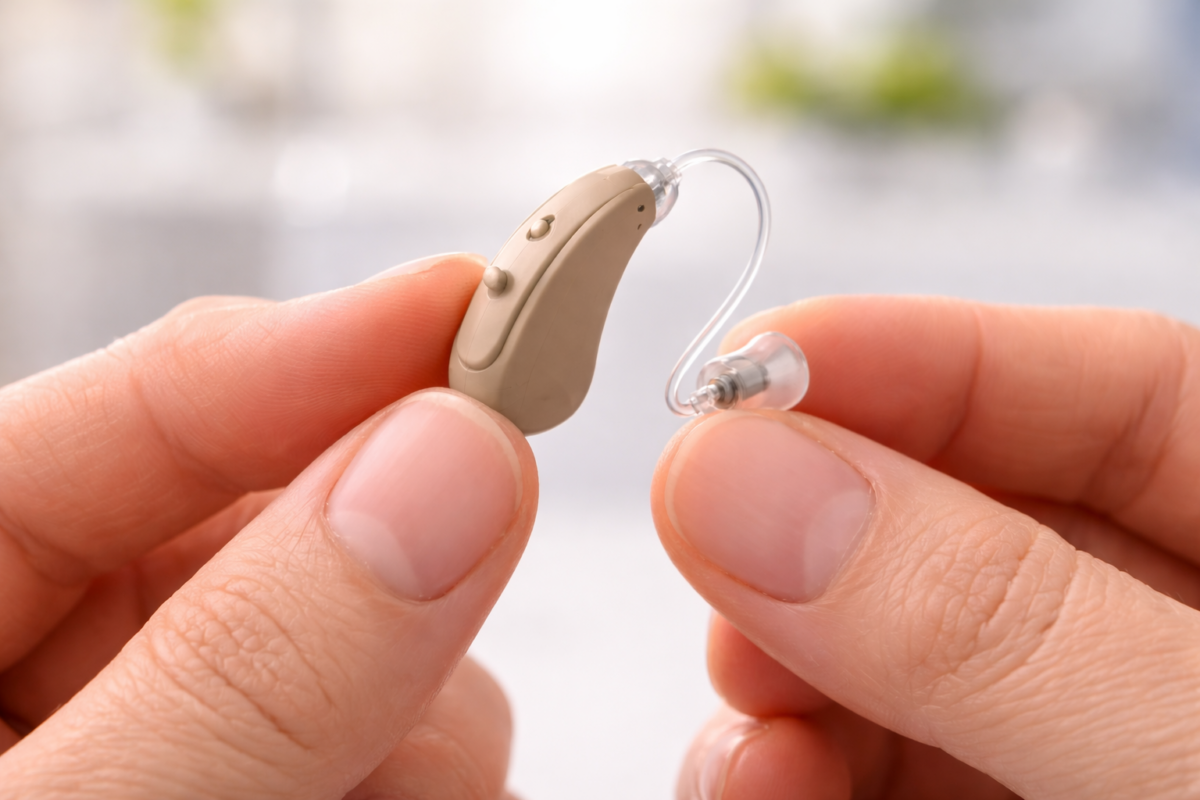
When some people picture hearing aids, they imagine oversized, beige devices from decades past — the kind that seemed almost as noticeable as a pair of headphones. Fortunately, modern hearing technology has come a long way.
Today’s devices are designed with both performance and discretion in mind. In fact, many are so subtle that others are far more likely to notice your glasses or earbuds than your hearing aids.
Modern hearing technology includes:
- Receiver-in-canal (RIC) devices that sit comfortably behind the ear with a nearly invisible wire
- Custom in-the-ear styles molded to fit discreetly inside the ear canal
- Rechargeable options without visible battery doors
Many people are genuinely surprised at how small today’s hearing aids are — especially when professionally fit and styled appropriately. In some cases, even close friends don’t realize someone is wearing them.
If appearance has been holding you back, it may be time to see what the best hearing aids in 2026 actually look like. They’re not what most people expect — and often not what you remember.
Myth #2: Hearing Aids Don’t Really Work That Well
The Truth: When properly evaluated and programmed, hearing aids improve clarity — not just volume.
One of the most persistent hearing aid myths is that devices simply turn the world up like a volume knob. If that were true, they wouldn’t be very helpful — just louder.
Modern hearing technology is designed to improve speech understanding — especially in challenging environments like restaurants, meetings, and family gatherings.
The best hearing aids in 2026 are essentially small computers that analyze sound thousands of times per second. They don’t just amplify — they prioritize speech and manage background noise intelligently.
Modern hearing aids can:
- Automatically adjust in different listening environments
- Reduce background noise
- Enhance speech clarity
- Connect seamlessly to smartphones and Bluetooth devices
- Learn your listening preferences over time
In other words, they’re doing a lot of work behind the scenes so conversations feel more natural.
It’s also worth understanding that technology levels matter. Higher tiers of hearing technology typically offer more advanced sound processing and better performance in complex listening situations. Think of it less like “extra features” and more like expanded support — particularly in noisy environments where many people struggle most.
Our general guidance is simple: select the highest level of technology that fits comfortably within your budget and lifestyle. More advanced processing often provides greater flexibility in everyday listening situations.
Of course, even the best device depends on proper fitting. Evidence based practices like real ear measurement used by audiologists during a hearing aid fitting ensure amplification is precisely matched to your hearing profile.
When fit and programmed correctly, hearing aids don’t just make things louder — they make conversations clearer, listening easier, and communication more natural.
Myth #3: Only Older Adults Need Hearing Aids
The Truth: Hearing loss can affect people at any age.
One of the most common hearing aid myths is that amplification is only for seniors. In reality, hearing changes can occur for many reasons — not just aging.
Noise exposure, genetics, medical conditions, head injuries, certain medications, infections, and even untreated middle ear problems can all affect hearing.
Some people notice gradual changes. Others experience sudden shifts that require prompt attention.
It’s not unusual for working professionals, active parents, students, or even teenagers to benefit from hearing support when clarity begins to decline.
Addressing hearing changes early can:
- Reduce listening fatigue
- Improve communication at work or school
- Support cognitive function
- Prevent frustration and social withdrawal
Hearing care isn’t about age. It’s about clarity, confidence, and staying connected.

Myth #4: Hearing Aids Are Too Expensive
The Truth: Cost is a real concern — but there are often more options than people realize.
If we’re being honest, this is one of the biggest reasons people delay treatment. It’s completely reasonable to ask, “Can I afford hearing aids?”
Today’s hearing aids vary in cost depending on the level of technology and features. Pricing reflects advanced sound processing, rechargeable systems, Bluetooth connectivity, and personalized programming. It also includes professional evaluation, fitting, and ongoing follow-up care — which are just as important as the device itself.
Many people are surprised to learn that some insurance policies now include hearing aid benefits. Coverage varies, but it’s more common than it used to be. Before appointments, our team verifies insurance benefits, so patients have a clear understanding of what their plan may cover. No surprises, just information.
For patients who qualify based on income, we also participate in Hearing the Call – National Capital Region, a nonprofit program that helps provide hearing aids to individuals who might not otherwise be able to afford them.
Hearing aids are available in multiple levels of technology, allowing recommendations to be tailored to both your listening needs and financial considerations. More advanced technology often provides greater support in complex environments, and we help patients choose a solution that feels sustainable — not stressful.
When thinking about cost, it can help to consider what improved hearing makes possible: easier conversations, less listening fatigue, more confidence at work, and stronger connections at home.
Our role is to evaluate, educate, and recommend solutions that support your hearing health.
Myth #5: Hearing Aids Are High Maintenance and Difficult to Manage
The Truth: Modern devices are designed for simplicity and convenience.
Another outdated perception is that hearing aids are fragile or complicated. In reality, modern hearing technology emphasizes user-friendly design.
Many devices now feature:
- Rechargeable batteries (no tiny battery changes required)
- Automatic environmental adjustments
- Smartphone apps for simple control
- Durable, moisture-resistant construction
Routine care involves basic cleaning and periodic follow-up visits. With professional support — and remote programming options when appropriate — maintaining hearing aids is far more convenient than many expect.
Bonus Myth: Over-the-Counter Hearing Aids Are Just as Good as Prescription Hearing Aids
The Truth: OTC hearing aids can help some people — but they are not the same as professionally fitted devices.
Since OTC hearing aids became available, many people assume they offer the same results as prescription hearing aids provided by an audiologist. That’s understandable.
But there are important differences.
OTC hearing aids are designed for adults with perceived mild to moderate hearing loss. They are self-selected and self-programmed, meaning there is no comprehensive diagnostic evaluation to determine the type or cause of hearing changes.
Professionally fitted hearing aids are:
- Based on a complete diagnostic hearing evaluation
- Programmed to match your specific hearing prescription
- Verified with real-ear measurement
- Supported by ongoing follow-up care and adjustments
A helpful analogy is reading glasses. Over-the-counter readers can improve vision for some people. But they don’t replace a comprehensive eye exam or prescription lenses customized for your eyes.
In the same way, OTC devices may provide basic amplification. However, they do not address complex hearing profiles, tinnitus, a difference in the abilities between ears, or advanced speech-in-noise challenges.
The goal isn’t just louder sound — it’s clearer communication.
Considering Hearing Aids? Here’s the Next Step.
If you’ve delayed treatment because of outdated hearing aid myths, it may be time to revisit the conversation.
A comprehensive evaluation provides clarity about your hearing and whether amplification is appropriate. If hearing aids are recommended, we guide you through available options and help you understand what truly matters for your listening environments.
At Capital Institute of Hearing & Balance, we provide personalized hearing aid evaluations and fittings at our Silver Spring and Chevy Chase offices, along with thoughtful follow-up care — including remote programming when appropriate.
Schedule a comprehensive evaluation to determine the most appropriate treatment plan for your hearing needs.
Clear hearing starts with accurate information. If you’re ready to separate myth from fact and explore what modern hearing technology can offer, we’re here to help.

Frequently Asked Questions
Are hearing aids noticeable?
Most modern hearing aids are small and discreet. Many styles are barely visible when worn.
Do hearing aids work in noisy environments?
Yes. Advanced devices use directional microphones and noise reduction technology to improve speech clarity in background noise.
How long do hearing aids last?
With proper care, most devices last 3–5 years depending on technology and usage.
Are hearing aids difficult to maintain?
Modern hearing aids are designed for ease of use. Rechargeable options and remote follow-up make ongoing care convenient.