
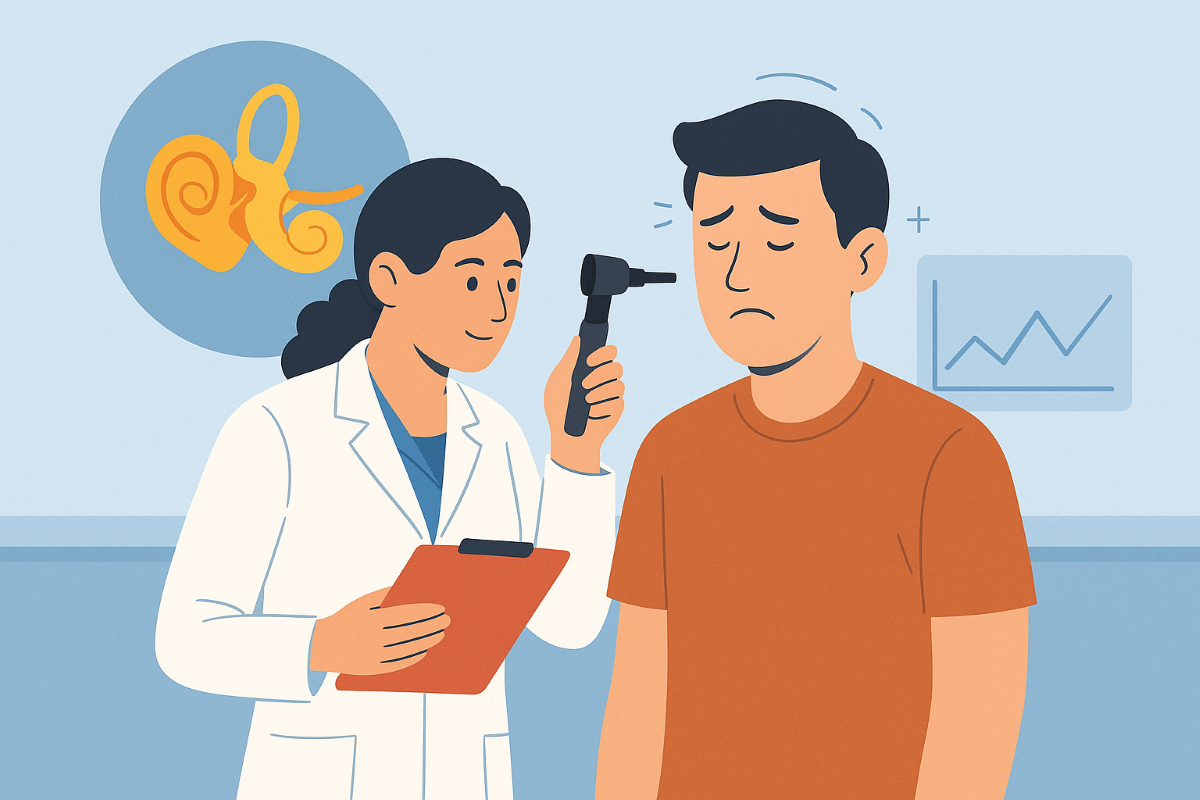
Feeling off balance can make everyday movements more difficult. You might pause before standing, steady yourself when walking, or feel uneasy turning your head too quickly. These experiences are common, and in many cases, the inner ear plays a major role.
At Capital Institute of Hearing & Balance, our audiologists use advanced testing to find the source of dizziness and imbalance. Understanding what is happening inside the ear, guides treatment planning to help patients move with confidence and stability again.
The Connection Between the Ear and Balance
The inner ear is home to the vestibular system, a set of small structures that constantly send signals to the brain about motion and head position. These signals combine with input from the eyes and muscles to help you stay balanced.
When something interrupts the ear’s ability to send accurate information, the brain receives mixed messages. That can cause sensations of spinning, lightheadedness, or unsteadiness, even when you are still. Identifying where that disruption starts is the first step toward improving balance.
When to Schedule a Balance Evaluation
You may benefit from professional balance testing if you experience:
- A spinning or tilting sensation when you change positions
- Feeling unsteady when walking or standing
- Blurred vision or nausea with quick head movement
- Sensitivity to motion in cars, stores, or crowded spaces
- A feeling of floating, rocking, or swaying when you are still
- Recent falls or a growing fear of falling
If dizziness appears suddenly and includes weakness, slurred speech, or double vision, seek emergency medical care immediately.
Common Causes of Dizziness and Imbalance
Audiologists often uncover one or more of the following causes during balance testing:
- Benign Paroxysmal Positional Vertigo (BPPV): Small calcium crystals in the inner ear move out of place, leading to brief spinning episodes.
- Inner ear infection or inflammation: Can temporarily affect balance and hearing.
- Age related changes: Natural changes in the ear and brain can influence stability.
- Head injury or concussion: Even minor trauma can disturb the inner ear’s balance system.
- Vestibular migraine: A form of migraine that can cause dizziness with or without headache.
- Circulatory or neurological factors: Reduced blood flow or nerve function may mimic ear related dizziness.
Because these conditions can share similar symptoms, testing helps pinpoint the specific cause.
What to Expect During Balance Testing
Testing begins with a conversation about your symptoms, medical history, and how dizziness affects your daily life. Your audiologist then uses safe, comfortable, noninvasive tests to measure how your ears, eyes, and brain work together to keep you balanced.
These may include:
- Videonystagmography (VNG): Tracks eye movements to evaluate how the inner ear responds to changes in position.
- Rotary chair testing: Measures how the balance system reacts to controlled motion.
- Posturography: Tests how your body maintains stability under different conditions.
- Hearing assessments: Identify any related hearing changes that co-occur with balance disorders.
Together, these tests create a clear picture of how your balance system is functioning and where support is needed.
Treatment and Recovery
After reviewing your results, your audiologist will explain what is causing your symptoms and outline a treatment plan. Depending on the diagnosis, treatment may include:
- Canalith repositioning: Gentle guided movements that correct BPPV and often bring quick relief.
- Vestibular rehabilitation therapy: A personalized program of exercises that retrain the brain to interpret balance signals accurately.
- Medication management: In working with your physician, medication may be used when appropriate to control severe dizziness or nausea.
- Lifestyle adjustments: Staying hydrated, maintaining regular movement, and improving lighting can help support balance recovery.
The goal is to reduce dizziness, restore confidence, and help you move comfortably again.
Frequently Asked Questions
What is the difference between dizziness and vertigo?
Dizziness is a general feeling of unsteadiness or disorientation. Vertigo is the specific sensation that you or your surroundings are moving or spinning.
Can balance problems go away on their own?
Some mild cases improve naturally, but recurring or long-lasting symptoms should be evaluated to rule out an inner ear cause.
How long does vestibular therapy take to work?
Many people start noticing improvement within a few weeks once they begin a consistent therapy program.
Is dizziness always related to the ear?
No. While many balance problems start in the inner ear, other issues such as blood pressure, medications, or neurological changes can cause similar symptoms. Testing helps identify the difference.
Regain Your Sense of Balance
You do not have to live with constant dizziness or uncertainty. With the right testing and treatment, most balance problems can be successfully managed or resolved.
If you are looking for balance testing in Maryland or need an audiologist for dizziness, contact us at Capital Institute of Hearing & Balance in Silver Spring or Chevy Chase to schedule an appointment. Our team will help you find answers and regain steady footing again.