
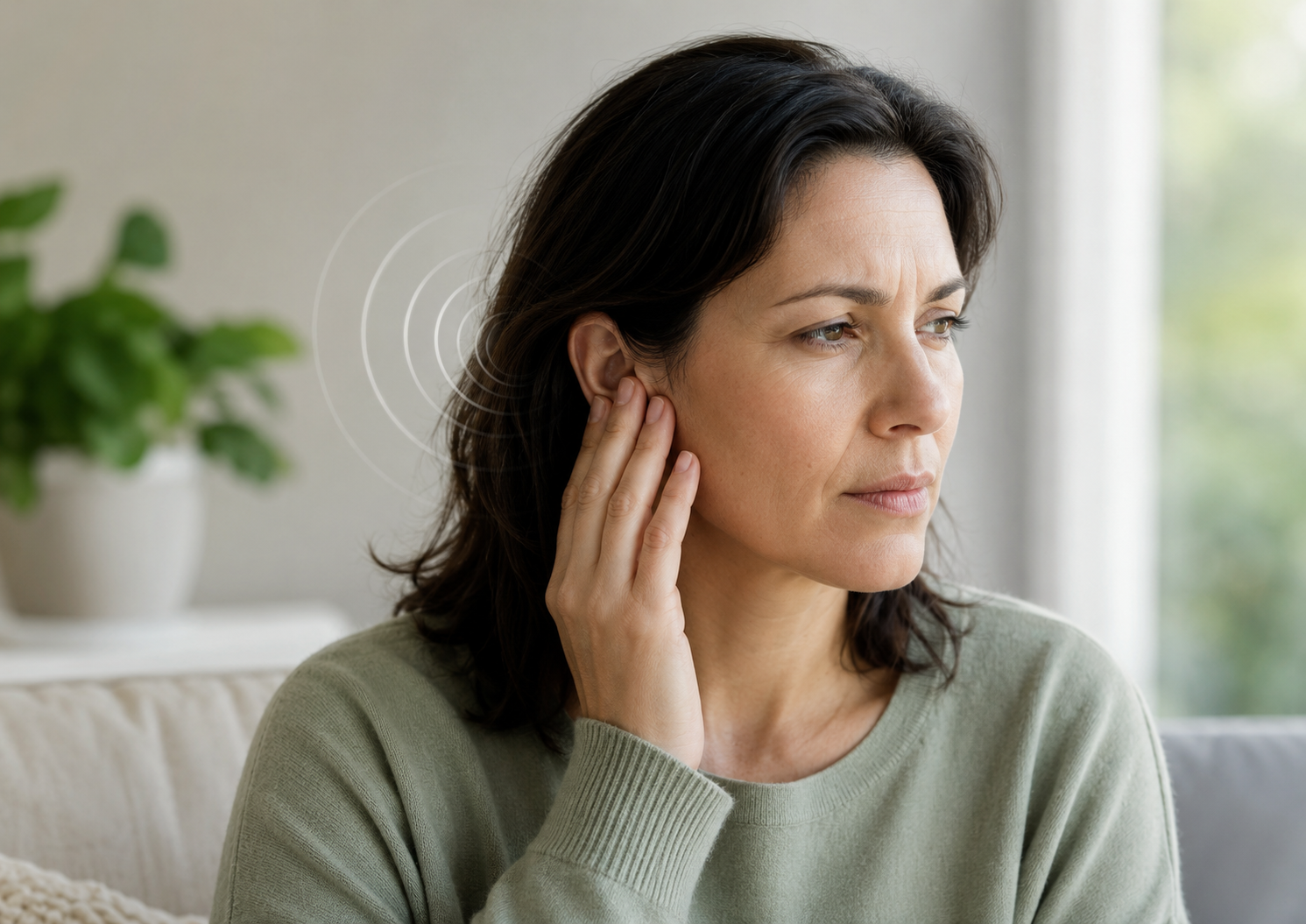
Ringing in one ear can be confusing, distracting, and sometimes concerning, especially when it does not go away. This symptom is often called unilateral tinnitus, which means tinnitus heard in only one ear.
Tinnitus is commonly described as ringing, but it can also sound like buzzing, humming, clicking, roaring, hissing, or whooshing. Some people notice it only in quiet rooms, while others hear it throughout the day. It may be constant, come and go, or seem louder during stress, fatigue, or after exposure to loud noise.
Importantly, one-sided tinnitus is more likely than bilateral tinnitus to signal an underlying issue that deserves attention. While ringing in one ear isn’t always a sign of something serious, it’s worth having evaluated if it’s new, persistent, or affecting your daily comfort. A professional hearing and tinnitus evaluation can help determine whether the sound relates to earwax, hearing changes, middle ear pressure, inner ear function, or another treatable cause.
What Is Unilateral Tinnitus?
Unilateral tinnitus means tinnitus that is heard in one ear rather than both. For example, you may hear ringing only in your right ear or only in your left ear.
This distinction matters. One-sided tinnitus often points to an issue affecting that specific ear or the nerve pathway connected to it. In many cases, the cause is treatable or manageable, but the first step is understanding what’s contributing to the sound.
A tinnitus evaluation often includes a detailed discussion of your symptoms, a hearing test, and additional testing when needed to better understand how your ears and auditory system are functioning.
Common Causes of Ringing in One Ear
There are several possible reasons someone may experience ringing in one ear. The cause is not always obvious without a professional assessment.
Earwax Buildup or Ear Canal Blockage
A buildup of earwax can block the ear canal and cause muffled hearing, pressure, or ringing in one ear. This can happen gradually or feel sudden.
If earwax is contributing, removing the blockage often relieves the symptom. Don’t use cotton swabs or other objects deep in the ear canal—this pushes wax farther in or irritates the ear.
Hearing Changes in One Ear
Tinnitus is often connected to changes in hearing. If one ear hears differently than the other, ringing may be more noticeable on that side.
Hearing changes don’t always feel obvious. You might notice yourself asking others to repeat themselves, turning one ear toward conversation, struggling in background noise, or needing higher volume on the TV. Sometimes ringing is the only sign.
A diagnostic hearing evaluation can help determine whether hearing changes are present and whether one ear is affected more than the other.
Noise Exposure
Loud noise exposure can irritate or damage the auditory system. This happens after concerts, sporting events, power tools, firearms, headphones at high volume, or long-term workplace noise.
Sometimes ringing fades after a short period. Other times it continues. If ringing in one ear persists, becomes more noticeable, or happens alongside hearing changes, schedule a hearing test.
Ear Infection, Fluid, or Eustachian Tube Problems
Fluid behind the eardrum, ear infections, allergies, sinus congestion, or Eustachian tube dysfunction can sometimes create pressure, fullness, muffled hearing, or ringing in one ear.
This type of tinnitus may be temporary, but if the symptom persists or keeps returning, testing can help determine whether the issue is related to the outer ear, middle ear, or inner ear.
Jaw or TMJ Issues
The jaw joint sits close to the ear. Jaw clenching, teeth grinding, or TMJ problems may contribute to ear symptoms, including ringing, pressure, or discomfort.
If your ringing changes when you chew, yawn, clench your jaw, or move your neck, be sure to mention that during your appointment. These details can help guide the evaluation.
Inner Ear Conditions
Some inner ear conditions can cause tinnitus along with hearing changes, dizziness, imbalance, ear pressure, or sensitivity to sound. Ménière’s disease, for example, may involve tinnitus, hearing changes, ear fullness, and episodes of vertigo.
Because Capital Institute of Hearing & Balance evaluates both hearing and balance concerns, our team can help identify whether your symptoms may involve the inner ear and recommend the appropriate next step.
Medication or Health-Related Factors
Some medications and health conditions can contribute to tinnitus or make it more noticeable. Blood pressure changes, circulatory issues, stress, sleep problems, and certain medications may all play a role for some people.
Never stop or change a prescribed medication without speaking with your physician. If tinnitus began after starting a new medication or changing a dose, make a note of the timing and discuss it with your healthcare provider.
When Should You Be Concerned About Ringing in One Ear?
Ringing in one ear should be evaluated if it is persistent, worsening, or affecting your hearing, sleep, focus, or daily comfort.
You should seek prompt medical care if ringing in one ear happens with sudden hearing loss, severe dizziness, facial weakness, intense headache, ear pain, drainage, or a pulsing sound that seems to match your heartbeat.
Even when symptoms are not urgent, one-sided tinnitus is a good reason to schedule a professional evaluation. The goal is not to assume the worst. The goal is to understand what is happening and determine whether treatment, monitoring, or additional testing may be needed.

Why a Hearing Evaluation Matters
A hearing evaluation is often one of the most important first steps for tinnitus, especially when the sound is only in one ear.
During a diagnostic evaluation, your provider may assess:
- Your hearing levels in each ear
- Whether one ear hears differently than the other
- How well you understand speech
- Whether there are signs of middle ear involvement
- How your tinnitus relates to hearing, balance, or other symptoms
This information helps determine whether tinnitus management, hearing technology, medical referral, or additional testing may be appropriate.
How Is Ringing in One Ear Managed?
Management depends on the cause. In some cases, tinnitus improves when an underlying issue is addressed, such as earwax buildup, fluid, infection, or medication-related factors.
When tinnitus is related to hearing changes or changes in the auditory system, management may include hearing aids, sound therapy, tinnitus counseling, Lenire treatment for tinnitus, communication strategies, or other personalized recommendations.
The right approach depends on your symptoms, test results, lifestyle, and how much tinnitus is affecting your day-to-day life.
Schedule a Tinnitus Evaluation in Silver Spring or Chevy Chase
If you are hearing ringing, buzzing, humming, or whooshing in one ear, it is worth having it evaluated. One-sided tinnitus does not always mean something serious, but it is a symptom that deserves attention, especially if it is new, persistent, or affecting your hearing, sleep, focus, or daily comfort.
Capital Institute of Hearing & Balance provides tinnitus and diagnostic hearing evaluations in Silver Spring and Chevy Chase. Our team can help identify possible causes, explain your results, and recommend the next best step for care.
Schedule an appointment today to get answers about ringing in one ear and take the next step toward relief.