
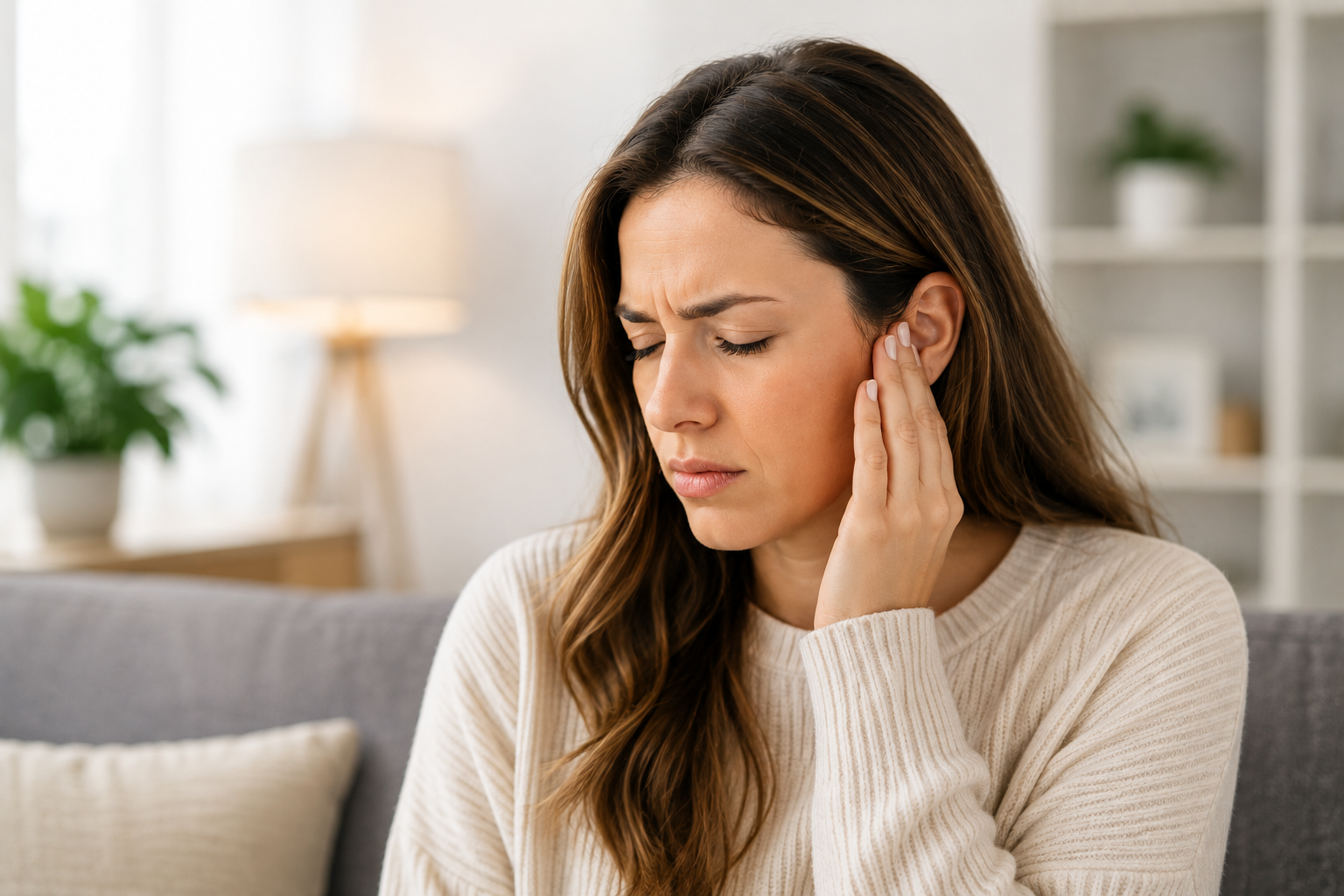
A clogged sensation in your ear can be frustrating, distracting, and sometimes concerning, especially when you do not have a cold or obvious illness. You may experience pressure, fullness, muffled hearing, popping, ringing, or the sense that sound is blocked on one or both sides.
While many people assume clogged ears are always related to congestion or infection, that is not always the case. Your ears can feel clogged for several reasons, including earwax buildup, allergies, Eustachian tube dysfunction, pressure changes, jaw issues, or changes in hearing.
In some cases, the feeling goes away on its own. In other cases, it may be a sign that your ears or hearing should be evaluated by an audiologist or medical provider. If the clogged feeling lasts, keeps coming back, or is paired with hearing changes, it is worth finding out what is causing it.
What Does It Mean When Your Ears Feel Clogged?
When your ears feel clogged, it usually means something is affecting how sound travels through the ear or how air pressure is balanced behind the eardrum.
People describe this feeling in different ways. You may notice:
- A plugged or blocked sensation
- Muffled hearing
- Ear pressure or fullness
- Popping or crackling sounds
- Ringing in the ear
- A feeling that one ear hears differently than the other
- Trouble hearing clearly in background noise
The cause may be as simple as earwax, but it can also involve the middle ear, Eustachian tube, inner ear, or central hearing system. That is why the symptom should not be ignored if it does not improve.
Common Reasons Your Ears Feel Clogged When You Are Not Sick
1. Earwax Buildup
Earwax is normal and protective. It helps trap dust and debris and keeps the ear canal from becoming too dry. However, too much earwax can build up and block the ear canal.
When earwax becomes impacted, it may cause fullness, muffled hearing, ringing, dizziness, itching, or discomfort. Mayo Clinic lists feeling of fullness, hearing loss, tinnitus, dizziness, itching, odor, discharge, pain, and infection as possible symptoms of earwax blockage.
One common mistake is trying to clean the ear with cotton swabs. This can push wax deeper into the canal and make the blockage worse. If earwax may be causing the clogged feeling, the audiologists at Capital Institute of Hearing & Balance can look inside the ear canal and check for wax buildup. At home, you can check for wax yourself using an Earigator video otoscope. If you are unsure what you are looking at, you can even send the pictures taken by the video otoscope to your audiologist for review.
2. Eustachian Tube Dysfunction
The Eustachian tubes connect the middle ear to the back of the nose and upper throat. They help equalize pressure and drain fluid from the middle ear.
When the Eustachian tube does not open or close properly, pressure can build up behind the eardrum. Johns Hopkins Medicine notes that Eustachian tube dysfunction can cause symptoms such as ear fullness, ear pain or pressure, and muffled hearing.
Eustachian tube dysfunction may be related to allergies, sinus inflammation, recent illness, air pressure changes, or other factors. Some people notice symptoms when flying, driving through mountains, exercising, or waking up in the morning. If this is suspected to be the issue, your hearing care professional can perform a test of Eustachian tube function and determine an appropriate treatment path.
3. Allergies or Sinus Inflammation
Even if you do not feel sick, allergies can affect your ears. Seasonal allergies, environmental irritants, or chronic sinus inflammation can cause swelling around the nose and throat. That swelling can interfere with Eustachian tube function. This may lead to ear pressure, popping, or muffled hearing.
For people in Maryland, seasonal allergy changes can be a common reason for recurring ear pressure or clogged ears. If symptoms come and go during certain seasons, after outdoor exposure, or along with postnasal drip, allergies may be part of the picture.
4. Fluid Behind the Eardrum
Fluid can sometimes collect behind the eardrum, especially after allergies, sinus congestion, or a recent upper respiratory issue. It may also be a result of a middle ear infection. You may no longer feel sick, but the ear can still feel blocked.
Fluid behind the eardrum can make sounds seem dull or distant. Some people notice popping, pressure, or a feeling that the ear needs to drain. If too much fluid builds up in the middle ear space, this can lead to pain and can even cause the eardrum to burst.
An audiologist or medical provider can help determine whether the issue is related to middle ear fluid, pressure changes, or another cause and help you find the best course of treatment.
5. Changes in Hearing
Sometimes a clogged feeling is not caused by wax or congestion. It may actually be related to hearing loss.
When hearing changes gradually, the brain may interpret the difference as a blocked or muffled sensation. You may feel like your ear is clogged, but the issue may be that certain sounds are not being heard clearly.
This is especially important if you notice:
- One ear feels different from the other
- Speech sounds muffled
- You ask people to repeat themselves more often
- Everyone sounds like they are mumbling
- You have trouble hearing in restaurants or groups
- The clogged feeling does not improve
A diagnostic hearing evaluation can help determine whether hearing loss is part of the issue.
6. Jaw or TMJ Issues
The jaw joint sits very close to the ear. Because of that, jaw tension, clenching, grinding, or TMJ problems can sometimes create ear pressure or fullness.
People with jaw-related ear symptoms may also notice jaw clicking, facial tension, headaches, or discomfort when chewing. The ear itself may feel clogged even when the ear canal and middle ear are clear of obstructions like wax or fluid. They may also experience ringing in the ears directly related to jaw movements and tension.
7. Sudden Hearing Changes
A sudden change in hearing should be taken seriously. If one ear suddenly feels clogged and your hearing drops quickly, it is important to seek medical attention right away. In the case of a sudden hearing loss, treatment should be initiated within 14 days for the best chances of recovering hearing and avoiding a permanent loss.
Sudden hearing loss can sometimes feel like ear pressure or blockage. Because timely treatment matters, it is best not to assume it is just wax, allergies, or congestion.
When Should You See an Audiologist for Clogged Ears?
You should consider scheduling an evaluation if the clogged feeling does not go away in a timely manner, keeps coming back, or is affecting how clearly you hear.
It is especially important to seek prompt care if you notice:
- Muffled hearing that lasts more than a few days
- Ear pressure that keeps returning
- Ringing in the ear
- Dizziness or balance concerns
- Pain or drainage
- Sudden hearing loss
- Symptoms in only one ear
- Trouble understanding speech
An audiologist can test how well you are hearing, check for patterns that may point to serious medical issues, and help determine whether you need additional medical evaluation.
How an Audiologist Can Help
At Capital Institute of Hearing & Balance, a diagnostic evaluation can help identify whether your clogged ear sensation may be related to hearing, middle ear function, or another concern.
Your evaluation will include:
- A conversation about your symptoms and hearing history
- A visual check of the ear canal
- Hearing testing
- Middle ear testing
- Recommendations for next steps
If your symptoms suggest a medical issue, you may be referred to the appropriate medical provider. If testing shows hearing changes, your audiologist can explain what the results mean and discuss options for treatment or monitoring.
Can Clogged Ears Go Away on Their Own?
Sometimes, yes. If the clogged feeling is related to mild pressure changes, allergies, or temporary Eustachian tube irritation, it may improve on its own.
However, if your ear feels clogged for more than a few days, if it keeps happening, or if your hearing seems different, it is better to have it checked. Waiting too long can delay answers, increase the likelihood of permanent hearing damage, and may make symptoms more stressful than they need to be.
What Not to Do If Your Ear Feels Clogged
When your ear feels blocked, it can be tempting to try to fix it quickly. However, some at-home methods can make the problem worse.
Avoid putting cotton swabs, hairpins, ear candles, or other objects into the ear canal. These can push wax deeper, irritate the canal, or cause injury.
You should also avoid ignoring symptoms that are sudden, painful, one-sided, or paired with dizziness, ringing, drainage, or hearing loss.

Frequently Asked Questions About Clogged Ears
I’m not sick, why does my ear feel clogged?
Your ear may feel clogged because of earwax buildup, allergies, Eustachian tube dysfunction, fluid behind the eardrum, jaw tension, or hearing changes. You do not have to be sick for your ears to feel full, pressured, or muffled.
Can allergies make my ears feel clogged?
Yes. Allergies can cause swelling and inflammation around the nose and throat, which can affect how the Eustachian tubes work. This may lead to ear pressure, fullness, popping, or muffled hearing.
Can earwax cause muffled hearing?
Yes. Earwax buildup can block the ear canal and make sounds seem muffled or dull. It can also cause fullness, ringing, itching, or discomfort. Mayo Clinic lists hearing loss and ear fullness as possible symptoms of earwax blockage.
What is Eustachian tube dysfunction?
Eustachian tube dysfunction happens when the small tubes that help balance pressure in the middle ear do not open or close properly. This can cause fullness, pressure, discomfort, popping, or muffled hearing.
Can hearing loss feel like a clogged ear?
Yes. Some people describe hearing loss as a clogged, blocked, or muffled feeling. If your ear feels clogged, but there is no wax or obvious congestion, a hearing evaluation can help determine whether hearing changes are involved.
When should I worry about a clogged ear?
You should seek care if the clogged feeling is sudden, one-sided, painful, or paired with hearing loss, dizziness, ringing, drainage, or balance problems. Sudden hearing changes should be evaluated promptly.
Should I use cotton swabs to clear a clogged ear?
No. Cotton swabs can push wax deeper into the ear canal or irritate the ear. If you think earwax is causing the problem, it is safer to have your ear checked by a professional.
Schedule a Diagnostic Hearing Evaluation
If your ears feel clogged even when you are not sick, it may be time to find out why. The cause could be simple, but it could also involve your hearing, middle ear function, allergies, or another issue that needs attention.
Capital Institute of Hearing & Balance provides diagnostic hearing evaluations to help patients better understand their symptoms and take the next step with confidence.
Schedule an appointment today to have your hearing and ear-related symptoms evaluated by an experienced audiologist in Maryland. We have office locations in Silver Spring and Chevy Chase.